Abstract:
In this work, we propose Image-to-Image Rectified Flow Reformulation (I2I-RFR), a practical plug-in reformulation that recasts standard I2I regression networks as continuous-time transport models.
While pixel-wise I2I regression is simple, stable, and easy to adapt across tasks, it often over-smooths ill-posed and multi-modal targets, whereas generative alternatives often require additional components, task-specific tuning, and more complex training and inference pipelines.
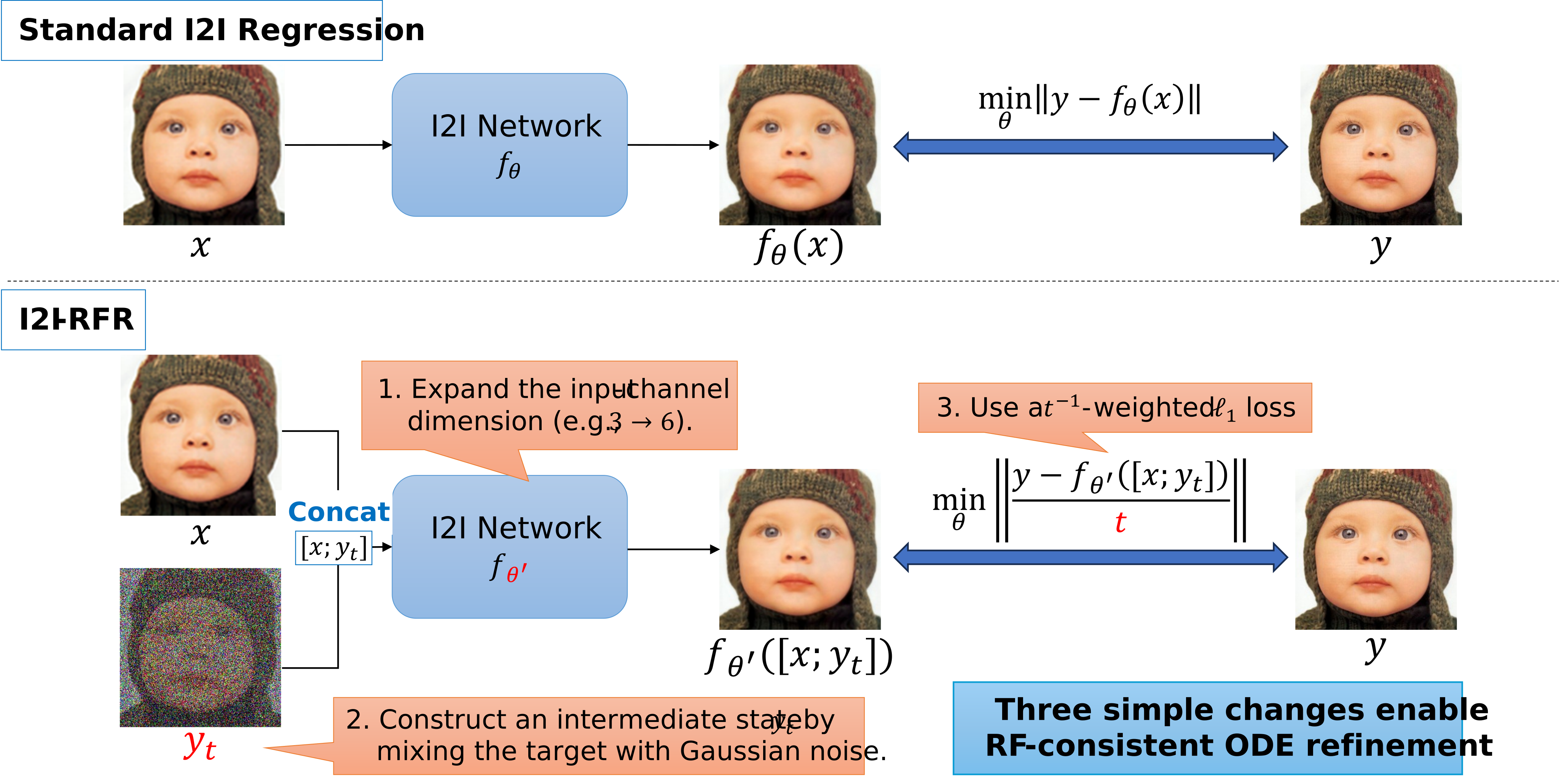
Our method augments the backbone input by channel-wise concatenation with a noise-corrupted version of the ground-truth target and optimizes a simple t-reweighted pixel loss.
This objective admits a rectified-flow interpretation via an induced velocity field, enabling ODE-based progressive refinement at inference time while largely preserving the standard supervised training pipeline.
In most cases, adopting I2I-RFR requires only expanding the input channels, and inference can be performed with a few explicit solver steps (e.g., 3 steps) without distillation.
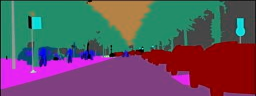
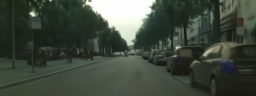
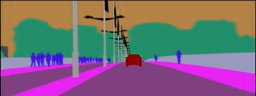
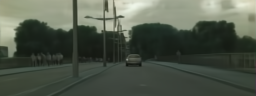
Extensive experiments across multiple image-to-image translation and video restoration tasks show broad perceptual improvements, with possible perception–distortion trade-offs in highly pixel-aligned settings such as super-resolution.
Paper (arXiv) Code (coming soon) BibTex
Image-to-Image Rectified Flow Reformulation (I2I-RFR):
I2I-RFR provides a simple way to turn existing I2I
regression models into RF-consistent ODE refiners. Starting from a
standard I2I regression network, I2I-RFR requires only three simple
changes:
(1) expanding the input channels to concatenate the input image with an
intermediate target state,
(2) constructing the intermediate state by mixing the ground-truth target
with Gaussian noise, and
(3) training the network to directly predict the clean target using a
t−1-weighted regression loss.
This formulation preserves the basic direct-regression design of existing
I2I backbones while enabling few-step ODE refinement.